Large Indoor Cat Tree: Scratching, Hammock & Condos
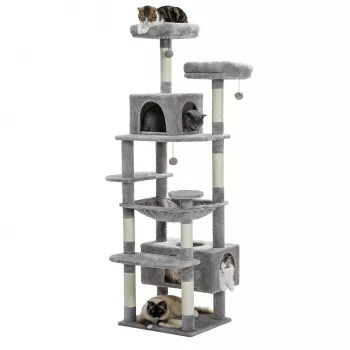
Large Cat Trees with Scratching Posts, Hammocks, and Condos: Comfort, Climbing, and Daily Enrichment
A well-designed cat tree creates a dedicated place to climb, perch, scratch, nap, and feel secure—especially for indoor cats that benefit from vertical space and predictable daily routines. A multi-level tower with scratching posts, a hammock, and enclosed condos can function like a “home base” for play, decompression, and rest. Below is a practical guide to choosing the right setup, placing it for maximum use, and keeping it stable and inviting over time.
Why a multi-level cat tower matters for indoor cats
Indoor cats still carry strong instincts to climb, observe from above, and retreat when they want quiet. Adding a tall, multi-zone structure supports those natural behaviors without asking your cat to improvise on bookcases or counters.
- Vertical space encourages climbing, surveying the room, and choosing rest spots away from foot traffic.
- Scratching access redirects claw maintenance from furniture, especially when the tower is placed near existing “problem” scratch areas.
- Multiple comfort zones—open perches, a hammock, and condos—let cats choose the feel they want throughout the day.
- Multi-cat homes often see less tension when there are separate lanes and resting stations at different heights.
- Shy or cautious cats may gain confidence with predictable hiding options (condos) and elevated observation points.
For broader enrichment principles and why the environment matters, see the American Association of Feline Practitioners (AAFP) Feline Environmental Needs Guidelines.
Key features to prioritize: scratching posts, hammock, and condos
Not all cat towers are built the same, even when they look similar. The best results come from choosing features that match how cats actually rest and move.
- Scratching posts at multiple heights: Taller posts support full-body stretching, while mid-height posts handle quick “touch-up” scratches.
- Good post coverage: Tightly wrapped scratching material with minimal gaps generally lasts longer and sheds less.
- A supportive hammock: Look for a shape that cradles the body and sturdy attachment points to prevent sagging.
- Roomy condos: Enclosed cubbies should allow easy entry and turning around, especially for larger cats.
- Platform variety: A mix of perch sizes helps both sprawlers and curlers find a favorite spot.
- Comfortable edges: Softer surfaces and rounded edges can reduce pressure on wrists and elbows during longer naps.
Feature-to-benefit guide for a scratching-post, hammock, and condo cat tower
| Feature | What it helps with | Quick tip for best results |
|---|---|---|
| Tall scratching posts | Full-body stretching scratches and shoulder/back engagement | Place near a common scratch spot (like a sofa corner) to encourage switching |
| Multiple scratch zones | Reduces queueing and conflict in multi-cat homes | Aim for at least two scratch options on different sides of the tower |
| Hammock bed | Secure, cradled naps; soothing resting area | Position the tower so the hammock isn’t directly in a draft or doorway |
| Enclosed condos | Privacy, decompression, and hiding for nervous cats | Keep one condo facing a quieter wall for a more sheltered feel |
| Top perch | Observation, confidence, and preferred rest in many cats | Ensure the base is stable to prevent wobble at the top |
Size, stability, and placement: preventing wobble and encouraging use
Even the best cat tree won’t get used if it feels shaky. Stability also matters for safety, especially for enthusiastic jumpers or heavier cats.
- Choose a solid footprint: A wider base improves stability, particularly on carpet or slightly uneven floors.
- Mind weight distribution during assembly: If the design allows options, keep heavier elements (like condos) lower to reduce top-heaviness.
- Use an anti-tip strategy: Place the tower near a wall and use wall anchors if they’re included—especially in homes with energetic climbers.
- Pick adoption-friendly locations: Near a window for “cat TV,” beside a sofa for social lounging, or close to existing scratch targets.
- Avoid problem spots: High-traffic hallways, next to loud appliances, or tight corners that make entry feel trapped.
Comfort and materials: keeping it inviting and easy to live with
Comfort is what turns a cat tree from a novelty into a daily habit. Small details—texture, temperature, and scent—can influence whether your cat chooses the tower over the couch.
For additional guidance on scratching behavior and enrichment basics, the ASPCA cat care resources are a helpful reference.
Making the tower irresistible: simple training and enrichment ideas
Care, cleaning, and longevity
Product spotlight: Large Cat Tree and Tower with Scratching Posts, Hammock, and Condos
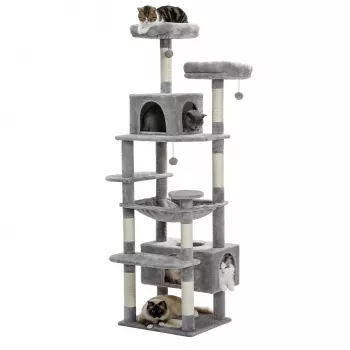
If you want an all-in-one indoor activity zone, the Large Cat Tree and Tower with Scratching Posts, Hammock, and Condos combines climbing, scratching, lounging, and hiding into one footprint. Multiple rest styles (open platforms, a hammock for cradled naps, and enclosed condos) help match different moods—social perching, private decompression, or cozy mid-day sleep.
More in-stock picks
- Personal Finance Made Easy Ebook – Budgeting, Saving, Investing & Debt Management Guide for Financial Freedom
- Women’s Long-Sleeve Yoga Jacket & High-Stretch Fitness Set
FAQ
How tall should a cat tree be for indoor cats?
Many indoor cats enjoy height for observation, but stability matters more than maximum tallness. Choose a height that fits your room, allows safe jumping between levels, and can be positioned near a wall (and anchored if needed) for added security.
How do you get a cat to use a new cat tree instead of the sofa?
Place the tower near the current scratching area, add familiar scent or a small amount of catnip to the posts, and use treats or wand-toy play to guide your cat onto the platforms. Temporarily making the sofa less appealing (covers or deterrents) helps, but consistent rewards for using the tower is what builds the habit.
Are hammock beds safe for cats?
Hammocks are generally safe when the attachments are sturdy and the tower is stable. Check fasteners regularly and stop using the hammock if the fabric tears, stitching fails, or hardware loosens.














Leave a comment