Portable Waterproof Bluetooth Speaker: TWS Stereo + RGB
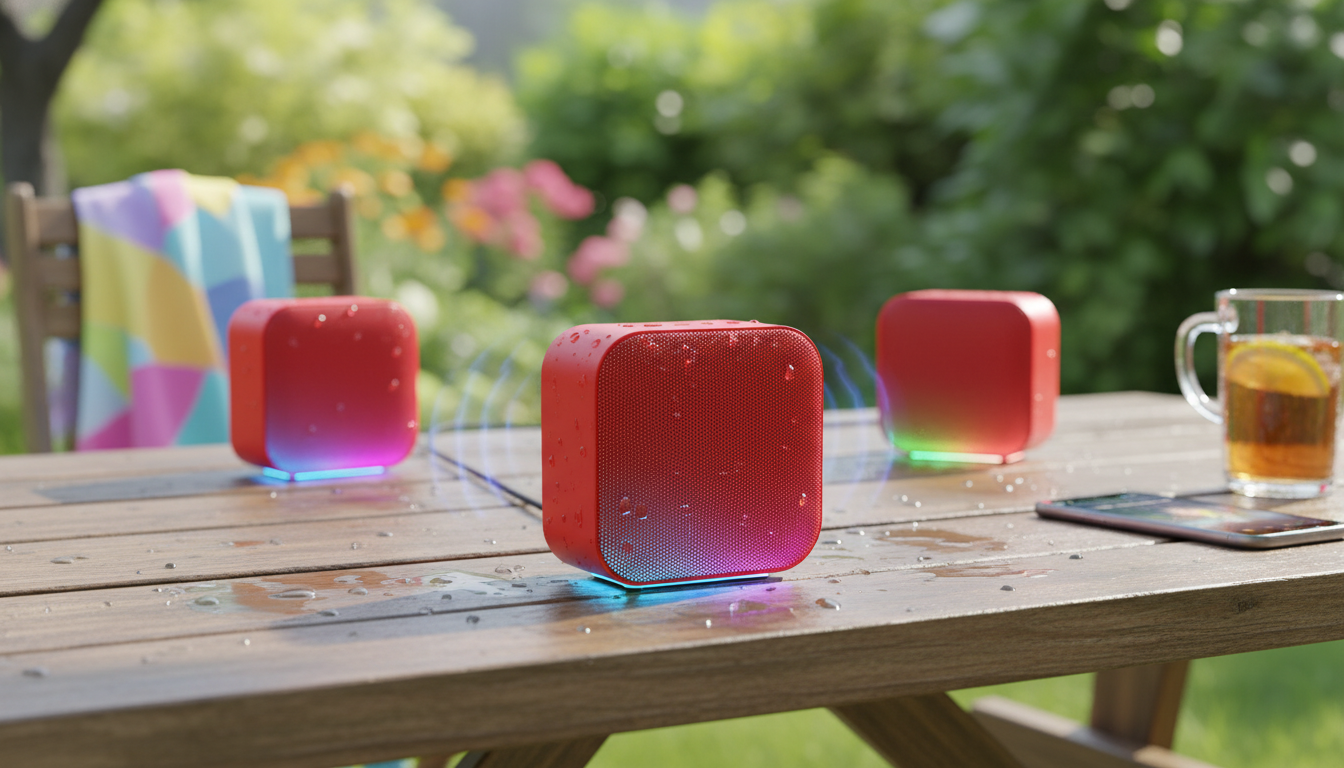
Portable Waterproof Bluetooth Speaker with TWS Pairing and LED RGB Lights
A compact speaker should be the kind of thing you toss in a bag without thinking—ready for a quick kitchen playlist, a desk setup, or a small outdoor hangout where splashes and light rain are part of the day. This portable waterproof Bluetooth speaker keeps the setup simple: pair your phone over Bluetooth, enjoy surprisingly room-filling sound for its size, and switch on LED RGB lights when you want a little extra atmosphere. Add a second compatible unit and TWS pairing expands the experience into true left/right stereo for a wider, more immersive soundstage. For more guidance, see Reviews by regancipher | Page 4 – Head-Fi.
What This Speaker Is Built For
- Grab-and-go size for quick trips, small rooms, desks, and casual outdoor use
- Wireless music playback from phones, tablets, and laptops via Bluetooth
- Waterproof design for splashes and light rain during outdoor activities
- TWS pairing to connect two matching speakers for a wider, more immersive soundstage
- LED RGB lighting to match the mood for parties, gaming, or nighttime ambiance
Key Features at a Glance
- Bluetooth connectivity for cable-free listening
- TWS pairing for dual-speaker stereo setup (requires a second compatible unit)
- Waterproof construction for added peace of mind around water
- LED RGB light modes for visual effects while playing music
- Portable form factor that fits easily into a bag for travel and day trips
Quick Checklist Before Buying
| Feature | Why it matters | What to confirm |
|---|---|---|
| Waterproof rating | Determines how well it handles splashes or rain | Look for an IP rating in the product details and avoid full submersion unless specified |
| TWS pairing | Creates a wider stereo image using two speakers | Ensure the second speaker supports the same TWS method and pairing steps |
| Battery life | Controls how long it runs away from a charger | Check claimed playtime and charging method (USB/port type) in the listing |
| RGB lighting controls | Sets mood and visibility at night | Confirm light modes and whether lights can be turned off |
| Size and output | Impacts loudness and bass performance | Match expectations: compact speakers suit small-to-medium spaces best |
Bluetooth Performance and Everyday Pairing
Bluetooth is the core convenience feature: it removes the friction of cords and makes it easy to jump between music, podcasts, and video audio from a phone, tablet, or laptop. For the smoothest connection, keep the speaker and your device within a clear line of sight and avoid heavy interference—busy Wi‑Fi environments can reduce practical range even when the speaker is close by. If audio starts to stutter, toggling Bluetooth off/on or restarting the speaker often clears the connection. For shared spaces, renaming the speaker in your phone’s Bluetooth settings can prevent accidental connections and make it easier to find. For further reading, see Reviews by marcelzxc | Page 2 – Head-Fi.
Bluetooth standards are maintained by the Bluetooth SIG; for technical background on versions and profiles, see the Bluetooth Core Specification.
TWS Pairing: How Stereo Sound Changes the Experience
TWS (True Wireless Stereo) lets two compatible speakers act like a single stereo system: one unit becomes the left channel and the other becomes the right channel. The upgrade is immediately noticeable with live recordings, wide mixes, games, and movies—sounds feel less “stuck” in one spot and more spread across the space.
- Ideal for backyard seating areas, small gatherings, and creating a balanced sound field in a room
- Placement tip: set speakers at roughly equal distance from the listening area for a clearer stereo effect
- If pairing fails, power-cycle both speakers and re-initiate TWS mode before reconnecting the phone
Waterproof Use: Where It Helps (and Where to Be Careful)
Water resistance is the difference between relaxing near a pool and constantly worrying about a stray splash. A waterproof build is great for bathrooms, kitchens, camping, patios, and light rain—but it’s still smart to treat ports and seams with care.
- Keep charging ports dry; make sure any port cover is fully sealed before bringing it near water
- Avoid saltwater exposure unless a product specifically says it’s suitable—salt can corrode ports and grills
- After exposure, wipe the exterior and let it dry fully before charging
Ingress protection (IP) ratings are standardized under IEC 60529; you can read more in the official IEC 60529: IP Code (Ingress Protection) reference.
LED RGB Lights: Ambiance, Visibility, and Control
Sound Expectations for a Compact Speaker
Battery and Charging Habits That Help It Last
Good Fits: Who This Speaker Is Best For
Where to Buy
- Women’s Long-Sleeve Yoga Jacket & High-Stretch Fitness Set
- Personal Finance Made Easy Ebook – Budgeting, Saving, Investing & Debt Management Guide for Financial Freedom
FAQ
How does TWS pairing work on a Bluetooth speaker?
TWS links two identical or compatible speakers so they act as a stereo pair, with one playing the left channel and the other playing the right. Typically, you enable TWS mode on both speakers, wait for them to link, then connect your phone to the primary speaker. If it doesn’t pair, power off both units, turn them back on, and initiate TWS again before reconnecting Bluetooth.
Is a waterproof Bluetooth speaker safe to use near a pool or in the rain?
It’s generally safe for splashes and light rain depending on the speaker’s IP rating, but it shouldn’t be submerged unless the rating explicitly allows it. Keep port covers sealed, avoid charging while wet, and dry the speaker thoroughly before plugging it in.
Can the RGB lights be turned off to save battery?
Many RGB speakers include a light button or a mode cycle that includes an “off” setting, which can help extend playtime. Check the speaker’s control buttons or mode options to confirm whether lighting can be disabled.















Leave a comment