40mm Vintage Diver Watch: Automatic Movement & Sapphire
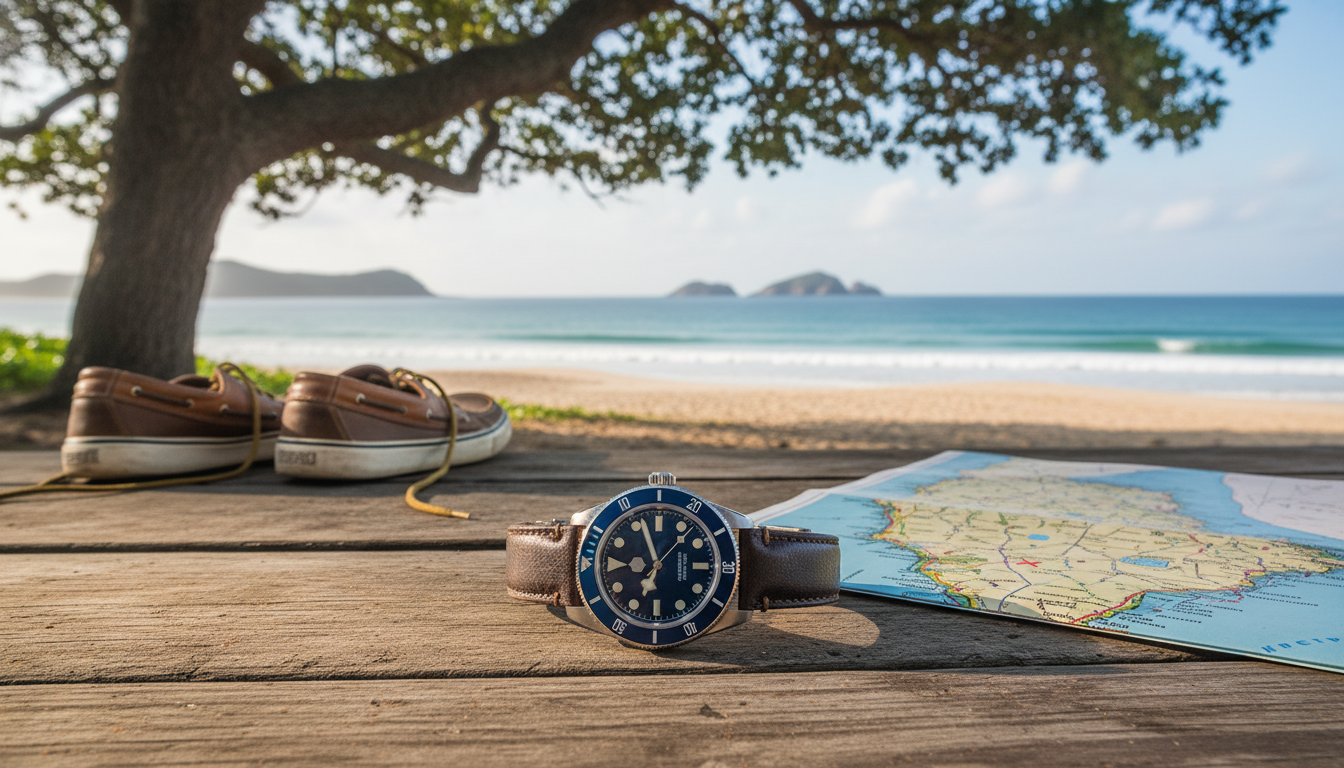
40mm Vintage Style Diver Watch with Automatic Movement & Sapphire Crystal
A 40mm diver-inspired watch can balance classic proportions with daily practicality. This vintage-leaning model pairs an automatic (self-winding) movement with a sapphire crystal, aiming for the charm of old-school dive styling while focusing on durability where it matters most: the movement and the crystal over the dial.
What makes this watch stand out
- 40mm case size that suits a wide range of wrists without the oversized feel common in modern divers
- Vintage-style diver design cues that work with casual wear, office outfits, and weekend use
- Automatic movement that runs from wrist motion, reducing reliance on batteries
- Sapphire crystal chosen for scratch resistance and long-term clarity
- A straightforward tool-watch approach: legibility and robustness as the core priorities
If you’re looking for a daily-wear diver aesthetic with classic sizing, you can view the product here: 40mm Vintage Style Diver Watch with Automatic Movement & Sapphire Crystal.
40mm sizing and vintage proportions
For diver-style watches, 40mm is often the “sweet spot.” It reads sporty on the wrist without looking like it’s trying too hard, and it generally slips under jacket cuffs better than the 42–44mm trend that dominated for years.
- Balanced presence: 40mm typically feels substantial, but not bulky, especially for all-day wear.
- Classic bezel-to-dial proportions: vintage-inspired divers often look best when the dial opening doesn’t feel crowded; 40mm helps keep the look crisp and period-correct.
- Fit isn’t just case diameter: lug-to-lug length and thickness matter. If the lugs extend past the edges of your wrist, even a 40mm watch can feel large.
- An easy downsize from 42–44mm: if you’re replacing a modern oversized diver, 40mm usually feels slimmer, lighter, and more wearable day-to-day.
| Case size | Typical wrist feel | Common use case |
|---|---|---|
| 38–39mm | Compact and understated | Vintage look, smaller wrists, dress-casual |
| 40–41mm | Balanced and versatile | Everyday diver style, most wrists |
| 42–44mm | Bold and sporty | Max presence, heavier straps/bracelets, larger wrists |
Automatic movement: what it is and why it matters
An automatic (mechanical) watch is powered by a mainspring rather than a battery. As you move throughout the day, an internal rotor turns and winds the spring, helping the watch keep running with normal wear. For many owners, that’s the appeal: a small, self-contained machine that stays alive through motion and routine.
- Battery-free operation: you won’t be swapping batteries, which can be a practical plus and part of the traditional charm.
- Expect a reset if it sits: if you don’t wear it for a while, it may stop—then you’ll set the time (and date, if present) and give it a few gentle winds to get going.
- Real-world accuracy varies: mechanical timekeeping can drift more than quartz, but consistent wear and proper adjustment often improve day-to-day results.
- Longevity depends on care: avoid hard impacts, prolonged magnet exposure, and moisture beyond the watch’s rating to protect reliability.
For a deeper overview of how mechanical movements work, see this reference: Mechanical watch (movement overview).
Sapphire crystal: clarity and scratch resistance
Sapphire crystal is a standout feature for an everyday watch because it helps preserve the “new watch” look. Compared with mineral glass, sapphire tends to resist the small scratches that accumulate from desk edges, jacket zippers, keys, and daily knocks.
To understand why sapphire is so scratch resistant, the Mohs hardness scale is a helpful baseline reference for comparing materials.
Diver-style details to look for in daily use
If you’re curious about what qualifies as a true diving watch standard, ISO 6425 is a useful starting point for understanding the specification (and why many “diver-style” watches are primarily lifestyle designs).
Quick checklist before wearing around water
| Item to confirm | Why it matters | What to do |
|---|---|---|
| Water-resistance rating | Defines safe exposure level | Use only within the stated rating |
| Crown position | Open crowns can leak | Ensure crown is fully secured after setting |
| Gaskets/age of watch | Seals degrade over time | Pressure test periodically if used in water |
Care, storage, and ownership tips
More in-stock picks to explore
- 40mm Vintage Style Diver Watch with Automatic Movement & Sapphire Crystal ($318.17) — classic sizing, automatic movement, and sapphire for everyday durability.
- Ultralight Quick-Remove Bike Rear Fender Mudguard ($14.82) — a practical add-on for commuting and wet-weather rides.
- Modern Minimalist Round Coffee Table ($1411.49) — clean lines and a statement piece for a modern living space.
FAQ
Is sapphire crystal really worth it on an everyday diver-style watch?
Yes, sapphire is valued because it resists scratches far better than most alternatives, helping the dial stay clear for years. It can still chip or crack from a strong impact, but for daily wear it’s one of the most practical upgrades.
How does an automatic watch stay powered if it isn’t worn every day?
It doesn’t stay powered indefinitely—automatic watches rely on wrist motion to wind the mainspring and have a limited power reserve. If it stops, you typically restart it with a few gentle winds and then reset the time (and date, if included).
Will a 40mm diver-style watch fit a smaller wrist?
Often, yes, because 40mm is a versatile size, but fit depends heavily on lug-to-lug length, case thickness, and strap choice. A shorter lug-to-lug and a flexible strap can make a 40mm diver wear comfortably even on smaller wrists.













Leave a comment