Double-Sided Grid Wall Panels: Flexible Displays Fast
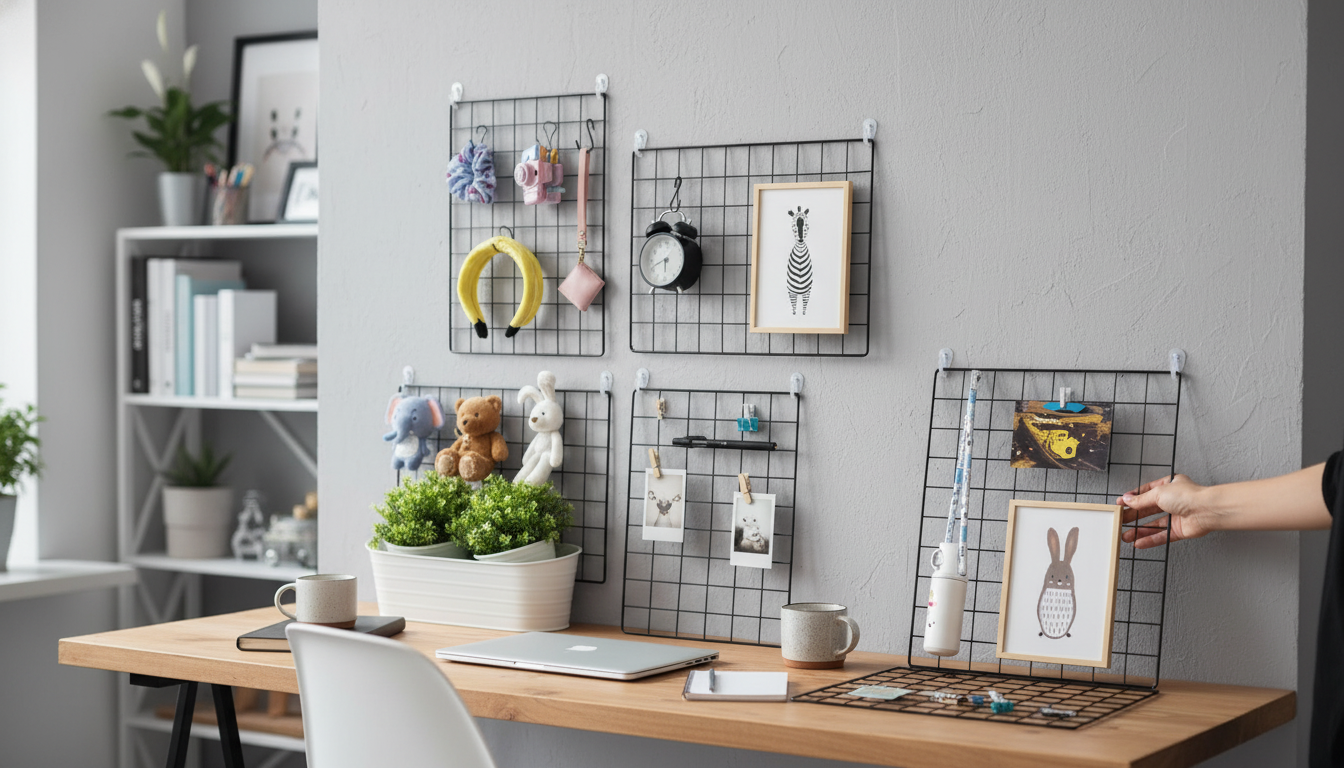
Double-Sided Grid Wall Panels: More Display, Less Clutter
Double-sided grid wall panels turn underused vertical space into a flexible display and storage station. With hooks and a sturdy wire grid, they make it easy to hang, sort, and rotate items—ideal for craft rooms, pop-up booths, dorms, offices, and small retail setups where quick re-merchandising and tidy organization matter. Instead of committing to permanent shelving or drilling into walls, a freestanding, double-sided grid creates a “move it when you need it” solution that stays practical as your needs change. For more guidance, see Grid Legs – T-Legs by Econoco – IWCF.
What a Double-Sided Grid Panel Setup Does Best
- Creates two usable display faces in the footprint of one stand—helpful when wall space is limited.
- Supports quick “grab-and-go” organization: hang tools, accessories, packaged goods, or lightweight bins.
- Improves visibility and access by keeping frequently used items off desktops and countertops.
- Makes it simple to reconfigure layouts by moving hooks instead of reinstalling shelves.
For makers and sellers, the biggest advantage is speed: you can reset a section in minutes by shifting hooks, swapping product groupings, or turning the stand to face a different direction. For shared spaces (like dorms, offices, or studios), it also helps keep commonly used items visible so they don’t disappear into drawers. For further reading, see Small bits / parts organization – Proposal Considerations – YO! Asmbly.
Key Parts and How They Work Together
- Grid panels: the wire lattice provides multiple attachment points for hooks and add-ons.
- Hooks: create hanging points for items with loops, hang tags, or packaging holes.
- Double-sided frame: enables back-to-back display so items can be grouped by category or workflow.
- Base/stand stability: a wide, balanced base helps prevent wobble when items are added or removed.
Common display items and practical hook choices
| Item type | Recommended approach | Why it helps |
|---|---|---|
| Keychains, jewelry cards, small accessories | Short straight hooks | Keeps items aligned and easy to browse |
| Tools (scissors, pliers), craft supplies | Medium hooks + spacing between tools | Reduces tangling and speeds up retrieval |
| Packaged goods (bags, blister packs) | Longer hooks with a rear stop (if available) | Prevents items from sliding off during browsing |
| Cables, cords, lanyards | Two hooks as a cradle or one hook with a loop | Avoids knots and keeps ends visible |
| Seasonal or rotating items | Dedicated “feature” section on one side | Makes weekly refreshes faster without disrupting the main layout |
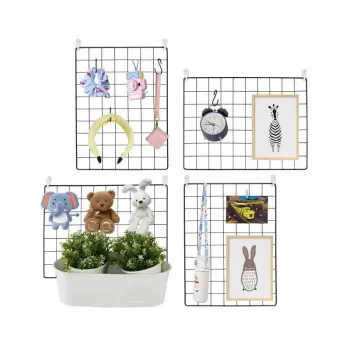
If you’re outfitting a multipurpose area, a dedicated stand like Double-Sided Grid Wall Panels with Hooks for Displays & Organization is a straightforward way to create structure without remodeling—especially when your inventory, projects, or routines change month to month.
Ways to Use Double-Sided Panels in Different Spaces
- Craft room: dedicate one side to frequently used tools and the other to materials by color/type.
- Home office: store chargers, headphones, small tech, and stationery while clearing desk space.
- Entryway or mudroom: create a drop zone for keys, dog leashes, caps, and reusable bags.
- Pop-up market booth: place bestsellers on one face and bundled add-ons on the reverse.
- Small retail: use the second side for overstock, size variants, or a “new arrivals” rotation.
For nurseries and family spaces, grid panels can also reduce “surface pileups” by assigning each daily-use item a home. If you’re organizing baby essentials for grab-and-go changes, pairing a hanging station with a ready kit like the Eco-Friendly Cloth Diaper Gift Set with Wet Bag can help keep changes streamlined without turning a dresser top into a staging area.
Layout Ideas That Keep Displays Neat (Not Cluttered)
- Zoning: split the grid into clear sections (top for visual draw, middle for core items, bottom for heavier or less-handled items).
- Consistent spacing: leave small gaps between product groupings so hooks don’t visually merge.
- Top-to-bottom flow: place frequently handled items around chest height and rarely used items higher or lower.
- Category labeling: add simple tags to each zone to reduce “random hook” drift over time.
- Balance both sides: avoid loading one face heavily while leaving the other nearly empty.
Setup and Placement Tips for Better Stability
For general safe storage and handling reminders—especially when you’re using a display in a shared work area—review OSHA’s guidance on materials handling and storage: https://www.osha.gov/materials-handling. The same common-sense principles apply: don’t overload, keep walkways clear, and prioritize stability.
Care, Cleaning, and Long-Term Use
Who Benefits Most From a Double-Sided Grid Display
For event sellers, a grid stand also supports “repeatable setups”—you can replicate the same zones from one market to the next, then adjust only the feature area. If you’re also tightening the business side of events (fees, inventory costs, and profit tracking), a simple guide like Personal Finance Made Easy Ebook – Budgeting, Saving, Investing & Debt Management Guide for Financial Freedom can help you build cleaner routines around purchasing and restocking.
FAQ
How much weight can grid wall hooks and panels hold?
Weight capacity depends on the stand/frame design, the specific hook style, and how evenly weight is distributed. Keep heavier items lower on the panel, spread weight across multiple hooks, and follow any manufacturer limits included with the stand.
Can the layout be changed without tools?
Yes—most grid wall hooks are designed to lift out and reposition by hand, making changes fast. Set basic zones first, then fine-tune spacing after you test how items hang and how easily people can browse or grab them.
Where should a double-sided grid panel stand be placed for the best results?
Place it on flat, stable flooring with enough clearance to access both sides comfortably, avoiding narrow walkways where people may bump the display. Put high-demand items around eye or chest height and keep heavier items lower for better stability.












Leave a comment