20V Cordless Drywall Screw Gun Kit for Fast Hanging
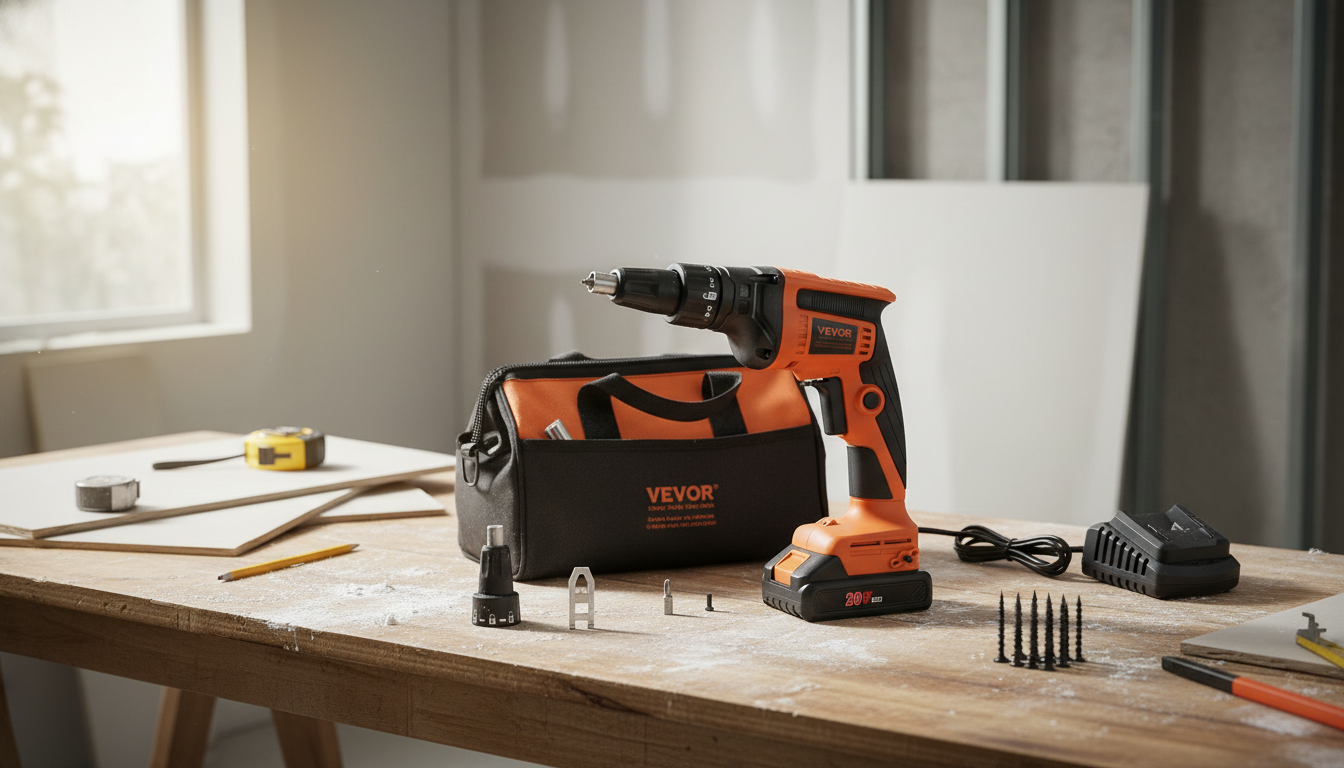
20V Cordless Drywall Screw Gun Kit: Fast, Consistent Drywall Hanging Without the Cord
A cordless drywall screw gun is built for repetitive fastening—setting hundreds of screws to a consistent depth with less fatigue than a standard drill. This kit centers on speed, control, and clean finishes, making it useful for hanging drywall sheets, securing backer boards, and tackling renovation punch-lists where extension cords slow work down.
What a drywall screw gun does differently than a drill
A standard drill/driver is a versatile tool, but drywall work rewards consistency more than raw versatility. A drywall screw gun is designed around the rhythm of hanging board: drive, release, move, repeat—while keeping screw heads seated at a predictable depth.
- Built for rapid repetition: It’s designed for repeated screw driving with a focus on consistent depth rather than high torque across many materials.
- Depth control for cleaner finishes: A depth stop helps prevent tearing the drywall paper while still seating the screw correctly for mudding and sanding.
- Optimized for drywall hardware: Many models are tuned for drywall screws and long run-times, reducing stop-and-go adjustments as you move across a wall or ceiling.
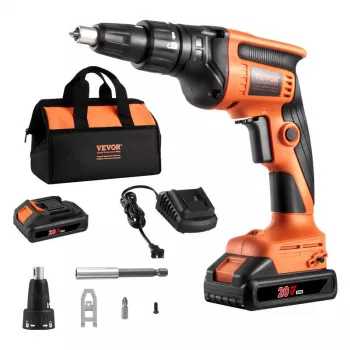
What’s included in the 20V cordless drywall screw gun kit
A 20V-class cordless platform is a practical middle ground for mobility and work time: easy to carry from room to room, convenient on ladders, and quick to reposition without snagging on cord clutter. Most kits include the core tool plus charging and battery essentials—exact contents can vary, so it’s smart to confirm what’s in the box before the first sheet goes up.
Expect the basics that support drywall workflows: depth-setting capability, common bit compatibility, and features aimed at repetitive driving. For larger installs, having at least one battery with enough capacity for sustained driving (and a plan for charging) keeps progress steady.
Quick kit checklist (confirm before the first sheet goes up)
| Item | Why it matters |
|---|---|
| Cordless screw gun | Purpose-built for consistent drywall fastening and reduced rework |
| Battery (20V class) | Freedom from cords; longer run-time reduces interruptions |
| Charger | Keeps workflow moving between rooms or during multi-day installs |
| Depth adjustment / nose cone | Helps set screws to the right depth without damaging drywall paper |
| Compatible bits | Ensures clean engagement and fewer stripped screw heads |
Key features to look for during setup and use
Drywall screw guns shine when they’re dialed in. A few minutes of setup can prevent hours of touch-up later, especially if you’re driving overhead or moving fast across multiple sheets.
- Depth setting: Adjust the nose cone/stop so the screw head lands slightly below the surface—set for finishing, not crushing the gypsum.
- Trigger and speed control: Smooth, consistent speed reduces cam-out and helps keep screw spacing uniform as you move.
- Bit changes: Quick access matters when a bit starts to round off mid-wall; swapping early is faster than fixing stripped screw heads.
- Ergonomics: Grip shape, balance, and weight are felt most during overhead work and long runs along ceilings.
Performance for common drywall tasks
Most drywall jobs fall into predictable patterns. A cordless drywall screw gun kit is especially useful where repetition and positioning matter more than brute force.
- Hanging drywall on studs/joists: Steady driving helps keep screw depth consistent, making joint compound work smoother and reducing sanding effort.
- Ceilings and overhead work: Cordless convenience reduces snags and improves repositioning on ladders or scaffolding—especially when working corner-to-corner.
- Patch and remodel work: Faster than a drill when repetitive fastening is needed, such as reattaching loose edges, replacing damaged sections, or adding backing.
- Know the limits: For thick framing connections, large structural screws, or dense material fastening, a dedicated drill or impact driver is usually a better match.
Battery and run-time planning for real jobs
Run-time isn’t just about the battery size—it’s also about how you stage the work. For multi-room installs, keeping a simple charging rhythm can prevent “dead battery downtime” right when you hit a productive stride.
How to get clean results: technique that prevents tear-out and dimples
Safety and jobsite best practices
Drywall work creates fine dust and involves overhead fastening—two reasons to keep safety routines simple and consistent. For additional guidance, refer to OSHA’s resources on drywall-related work practices at OSHA — Drywall Installation.
- Dust control: Drywall dust can irritate lungs and eyes; use a vacuum attachment when sanding and wear a properly fitted respirator when needed. For silica awareness and workplace health context, see CDC/NIOSH — Silica Dust.
- Hearing and eye protection: Fast driving and overhead work increase the chance of debris and noise exposure—protect accordingly.
- Cable-free doesn’t mean hazard-free: Keep stable footing on ladders, and maintain a clean work area to reduce slips on dust and offcuts.
Care and maintenance to keep driving consistent
When this kit is a strong fit (and when to consider alternatives)
Shop in-stock picks
- 20V Cordless Drywall Screw Gun Kit ($141.01)
- Personal Finance Made Easy Ebook – Budgeting, Saving, Investing & Debt Management Guide for Financial Freedom ($20.99)
FAQ
How deep should drywall screws be set?
Aim for the screw head slightly below the surface without breaking the drywall paper. Adjust the depth stop until the board isn’t tearing and the screw head sits consistently for easy finishing.
Can a drywall screw gun be used for wood or decking screws?
It can drive some screws, but it’s optimized for drywall depth control and repetitive fastening. For thicker wood, structural fasteners, or dense materials, a drill or impact driver is usually more suitable.
Why do drywall screws keep stripping?
Common causes include a worn bit, not fully seating the bit in the screw, driving at an angle, too much speed, or inconsistent pressure. Replace bits sooner and keep the tool perpendicular to reduce cam-out.















Leave a comment