4-Week Puppy Training Routine: Potty, Cues, Socialization
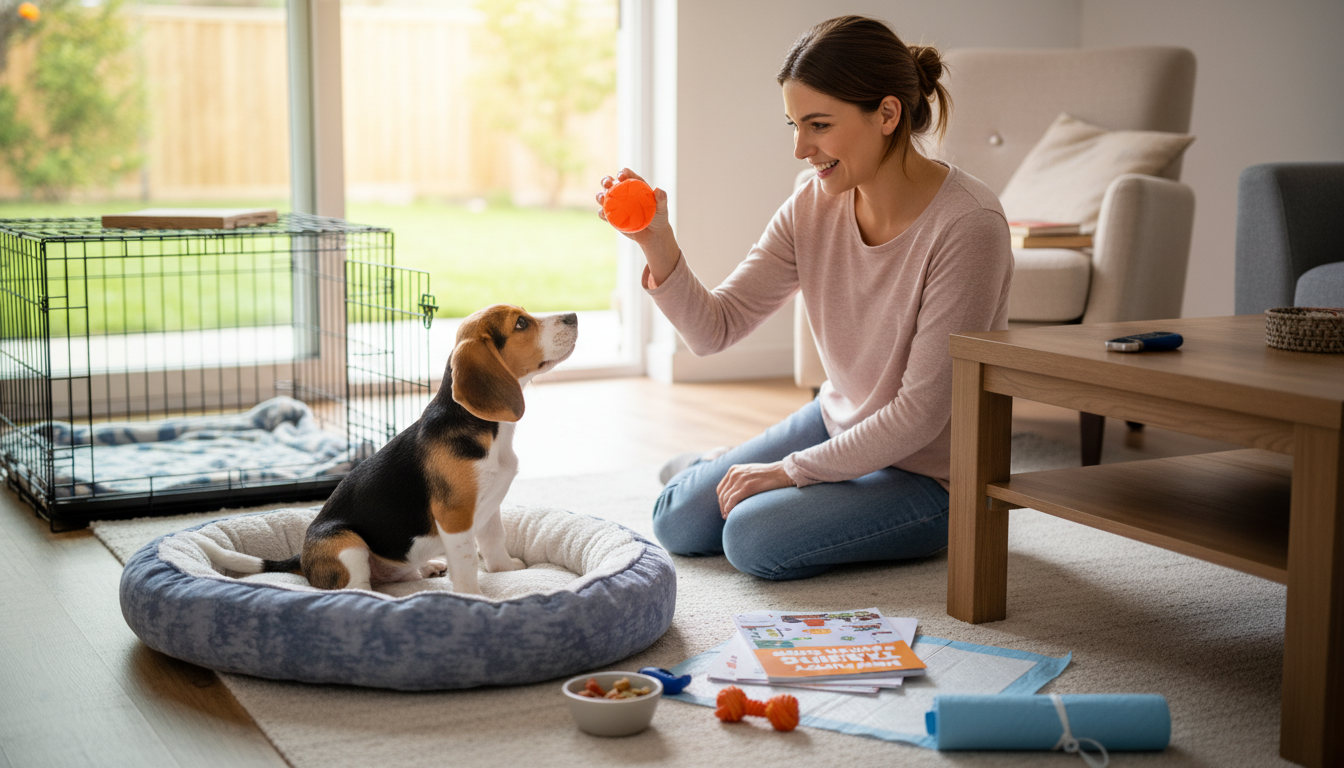
New Puppy Training Starter Guide: A 4-Week Routine for House-Training, Commands, and Socialization
A brand-new puppy learns fastest with a simple plan that repeats every day. This starter guide breaks training into a 4-week routine with clear house-training steps, foundational cues, gentle handling exercises, and age-appropriate socialization so progress feels measurable instead of overwhelming.
Before Training Starts: Set Up Success at Home
Good training is easier when the environment does half the work. A few smart choices up front reduce accidents, protect your stuff, and help your puppy learn faster.
- Choose a confinement plan: a crate plus a puppy-proofed pen, or a small gated room, prevents “practice” accidents and chewing rehearsals.
- Stock essentials: enzyme cleaner, chew options in different textures, a treat pouch, a clicker (optional), and a lightweight leash/harness.
- Create 2–3 designated potty locations outside: keep the path consistent to build a strong habit loop.
- Decide household rules early: furniture access, feeding locations, and sleeping spot should be consistent so cues and boundaries stay clear.
Daily Rhythm: The Simple Loop That Builds Good Habits
The secret to early puppy training is repetition—not marathon sessions. Use a predictable loop all day long: potty → play/train → calm time → potty → meal (if scheduled) → nap.
- Potty timing: most puppies need to go after waking, after play, after eating/drinking, and every 30–120 minutes depending on age and how closely you’re supervising.
- Keep sessions short: 1–3 minutes for very young puppies; up to 5 minutes as attention improves.
- Prioritize sleep: many puppies need 18–20 hours a day. Overtired puppies mouth more, zoom more, and learn less.
Sample Day Schedule (Adjust Times to Fit Your Home)
| Time Block | What to Do | Goal |
|---|---|---|
| Wake-up | Potty immediately, then calm praise/reward | Prevent morning accident; reinforce outdoor success |
| Morning | Breakfast, short training (name, touch), brief play, potty | Build engagement and predictability |
| Late morning | Nap in crate/pen, potty before and after | Teach settling; support bladder training |
| Afternoon | Leash practice indoors, handling drills, chew time, potty | Build comfort with equipment and touch |
| Evening | Meal, gentle play, social exposure (sound/objects), potty | Confidence building without overstimulation |
| Bedtime | Last potty, quiet routine, sleep | Reduce night waking; establish bedtime cues |
4-Week Training Focus (One Step at a Time)
Think of the first month as stacking small wins. Each week builds on the week before, so you’re not trying to teach everything at once.
- Week 1: Bonding and basics—name response, marker word/clicker, potty routine, calm crate introductions, gentle handling.
- Week 2: Household manners—sit, recall foundations, leash familiarity, trading games to prevent resource guarding, bite inhibition basics.
- Week 3: Confidence and impulse control—down, leave it, settle on a mat, short alone-time practice, polite greetings.
- Week 4: Real-life practice—proofing cues in new rooms/outdoors, longer calm periods, structured socialization field trips, refining potty reliability.
House-Training: A Clear Plan for Fewer Accidents
House-training improves fastest when your puppy never has the chance to “succeed” indoors. That means active supervision or safe confinement—no in-between.
- Supervise or confine: if eyes cannot be on the puppy, use a crate/pen to prevent silent accidents.
- Reward immediately outside: deliver the treat within 1–2 seconds of finishing so the reward connects to the potty act (not walking back inside).
- Interrupt, don’t punish: if caught mid-accident, calmly scoop up and go outside. Punishment often creates hiding and anxiety.
- Track patterns: note accident times and tighten your schedule; reduce freedom until success is consistent.
- Fade pads thoughtfully (if used): move pads closer to the exit, then outside, to avoid building a long-term indoor preference.
For additional guidance, the Humane Society’s house-training overview is a helpful reference for timing, supervision, and realistic expectations.
First Commands That Matter Most
The most useful early cues aren’t fancy—they’re the ones that keep your puppy safe and easy to live with.
Socialization That Builds Confidence (Without Overwhelming)
Two reliable, research-backed references for safe, early socialization are the AVSAB position statement on puppy socialization and the AKC’s puppy socialization guide.
Common Early Challenges and Quick Fixes
Printable Routine Option for Busy Households
- Look for a format that includes checklists, a 4-week progression, command steps, and quick troubleshooting pages.
- For a ready-to-use routine with structured weekly goals, printable pages, and beginner-friendly steps, see the New Puppy Training Starter Guide (printable 4-week routine).
If you’re also organizing the added monthly costs that come with a new pet (supplies, training, vet visits), the Personal Finance Made Easy Ebook can help you set a simple plan so puppy expenses don’t feel chaotic.
FAQ
How long does it usually take to house-train a puppy?
Many puppies make big progress in a few weeks, but reliable house-training often takes a few months. Age, supervision, and consistency matter most—tight routines, immediate rewards outside, and gradual freedom typically speed things up.
What should a puppy learn first: sit, crate, or potty training?
Start with a predictable potty routine and calm confinement (crate/pen) so accidents don’t become a habit. Then layer in name/attention and “touch” for engagement, and add sit/down as quick, confidence-building wins.
How much socialization is appropriate for a young puppy?
Short, positive exposures daily are ideal—think minutes, not hours—focused on calm observation and treats, not forced greetings. Follow your veterinarian’s vaccine guidance and increase distance if your puppy shows stress (freezing, tucked tail, frantic pulling away).
















Leave a comment